

*Raw Material Species Cultivation Documentation
*Product Specification
*COA
*Relevant Third-Party Testing Reports
*Microbiological Testing
*Heavy Metal Testing
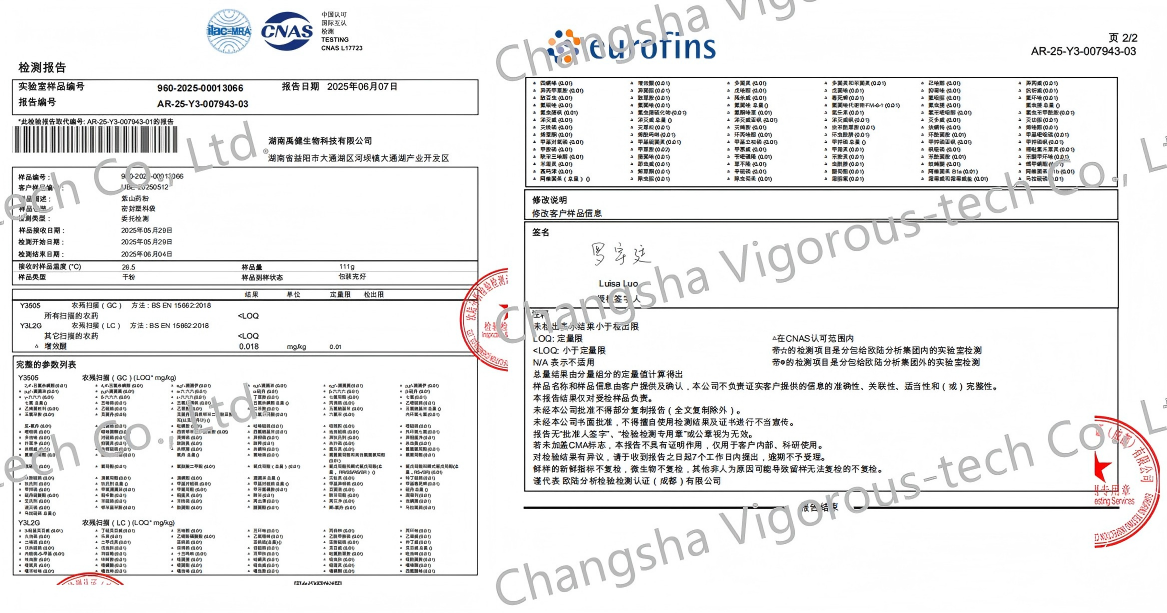
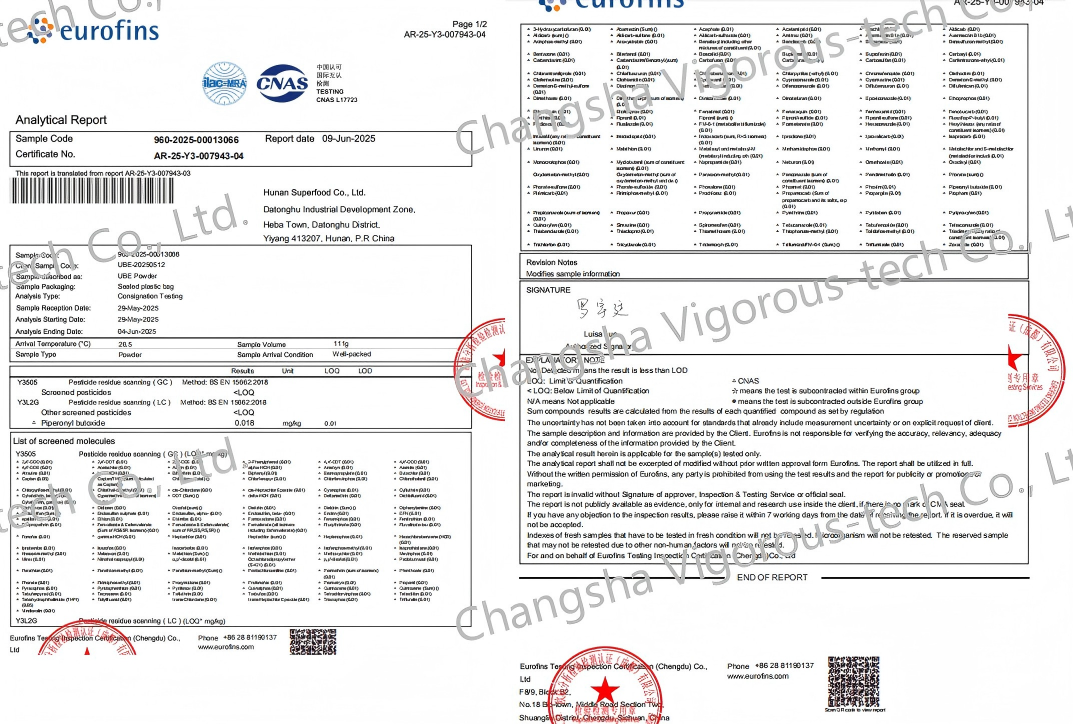
*Pesticide Residue Testing, where applicable


Authentic Purple Yam Powder, also known as Ube Powder, is a powdered ingredient made from purple-fleshed yam, particularly the species Dioscorea alata. It is naturally purple, mildly sweet, and slightly nutty, making it increasingly popular in beverages, bakery products, ice cream, confectionery, snacks, and other modern food applications.
In recent years, ube has moved from a traditional Southeast Asian ingredient into a global food trend. Ube lattes, ube ice cream, cakes, cookies, pastries, milk tea, and other purple-colored products are increasingly appearing on menus and supermarket shelves in international markets.
But is Purple Yam Powder simply another colorful food ingredient?
Not exactly.
For food manufacturers, ube combines several powerful market trends:
Authentic cultural heritage + distinctive flavor + natural purple appearance + clean-label innovation + social-media-friendly products.
This combination is helping Purple Yam Powder attract growing attention from food brands, ingredient distributors, beverage companies, bakeries, and dessert manufacturers worldwide.
Purple Yam Powder is produced by processing and milling purple-fleshed yam into a fine powder.
The ingredient is commonly marketed under several names:
*Purple Yam Powder
*Ube Powder
*Ube Yam Powder
*Purple Yam Flour
*Dioscorea alata Powder
*Greater Yam Powder
The botanical identity is particularly important.
Authentic purple yam is generally associated with Dioscorea alata.
Ube is strongly associated with Filipino cuisine, where purple yam has traditionally been used in products such as ube halaya, ice cream, cakes, pastries, and halo-halo.
Unlike many “new” superfood trends, ube itself is not new.
The new development is the globalization of an established traditional ingredient.
This gives Purple Yam Powder an important advantage: it combines the excitement of a new food trend with an authentic culinary history.
The international popularity of ube is being driven by several food and consumer trends at the same time.
1. Ube Is Highly Visual
One of the most recognizable characteristics of Purple Yam Powder is its purple color.
Purple foods naturally stand out in a crowded marketplace.
Ube can be incorporated into:
*Purple lattes
*Smoothies
*Ice cream
*Cakes
*Cookies
*Gummies
*Milk tea
*Pancakes
*Pastries
*Dessert sauces
For modern food brands, visual differentiation matters.
A product with a distinctive appearance can become more memorable on supermarket shelves and more attractive in social-media content.
This is one reason ube has gained attention among cafés, bakeries and dessert brands.
2. Ube Is Being Compared With Matcha
The global success of matcha demonstrated how a traditional Asian ingredient could become an international food and beverage phenomenon.
Ube is now following a similar path.
International food media have increasingly reported the growing popularity of ube in cafés, desserts and beverages, with some coverage describing it as a potential competitor to the established matcha trend.
However, ube offers a different sensory experience.
Matcha is associated with a distinctive green color and earthy, slightly bitter flavor.
Ube offers a vibrant purple appearance and a naturally sweet, nutty and creamy flavor profile.
This makes Purple Yam Powder particularly attractive for dessert and beverage innovation.
Purple Yam Powder generally has a mild and pleasant flavor.
Depending on the variety, raw material and processing method, its sensory profile may include:
*Mild sweetness
*Nutty notes
*Creamy characteristics
*Earthy undertones
*A subtle vanilla-like impression
This relatively gentle flavor makes ube suitable for a wide range of formulations.
It can be paired with other popular food flavors, including:
*Ube + Coconut
A natural combination for tropical beverages, ice cream and desserts.
*Ube + Vanilla
Suitable for cakes, cookies, milk drinks and confectionery.
*Ube + Chocolate
A premium combination for bakery and chocolate products.
*Ube + Mango
Suitable for smoothies, beverages and frozen desserts.
*Ube + Matcha
A visually distinctive combination for modern café beverages and desserts.
One of the most important questions for ingredient buyers is:
Is Purple Yam Powder the same as Purple Sweet Potato Powder?
No.
Although both can have purple flesh and can be processed into purple powders, they are different plants.
Purple yam is generally associated with Dioscorea alata, while purple sweet potato belongs to Ipomoea batatas.
| Feature | Poudre d'igname pourpre | Purple Sweet Potato Powder |
| Common name | Ube / Purple Yam | Purple Sweet Potato |
| Botanical identity | Dioscorea alata | Ipomoea batatas |
| Flavor | Mild, sweet, nutty | Sweet, earthy |
| Typical applications | Ube desserts, beverages, ice cream, bakery | Bakery, beverages, snacks, noodles |
| Cultural association | Strongly associated with Filipino cuisine | Widely used in Asian food applications |
| Market positioning | Emerging global ube trend | Established purple food ingredient |
For a product specifically marketed as Ube, botanical identity is particularly important.
A purple-colored powder is not automatically authentic ube.
As the international ube market grows, ingredient authenticity and raw material traceability are becoming increasingly important.
Different purple root crops can look similar after processing, and the term “purple yam” may sometimes be used loosely in commercial markets.
For B2B buyers developing an authentic ube product, simply checking the color of the finished powder is not enough.
The most important question is:
What plant does the powder actually come from?
At Changsha Vigorous-Tech Co., Ltd., we place strong emphasis on raw material identification and traceability.
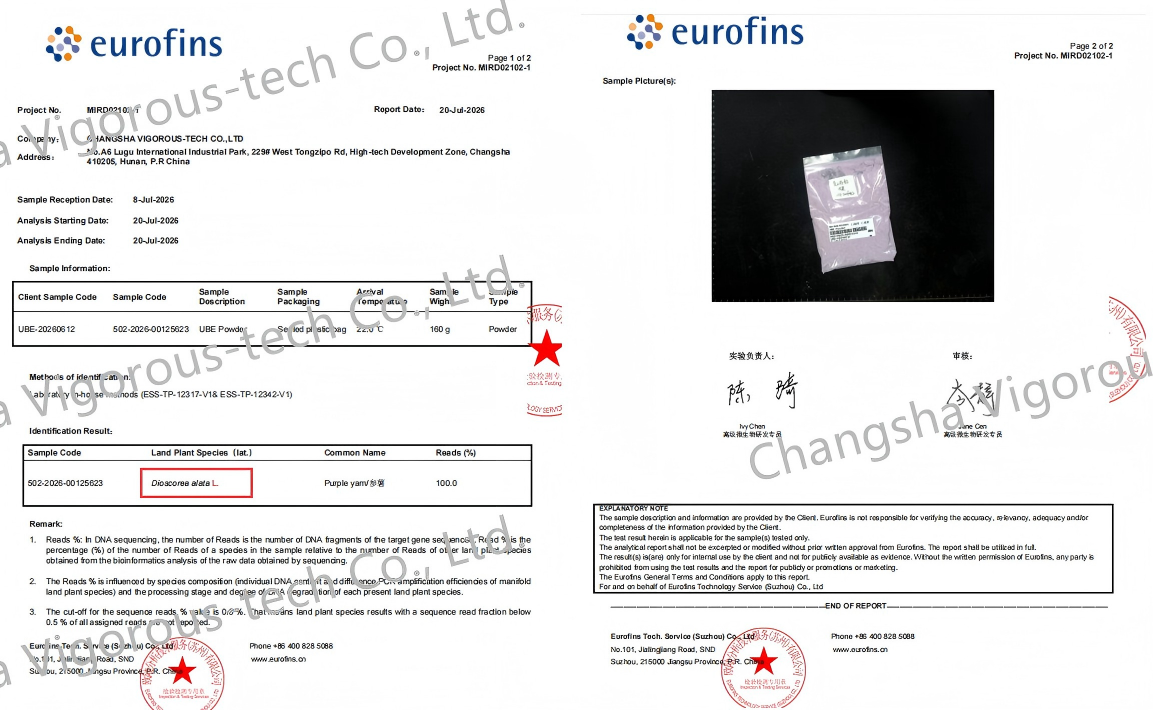
Raw Material Species Cultivation Documentation
For our Purple Yam Powder, we can provide Raw Material Species Cultivation Documentation to qualified B2B customers upon request.
This documentation can help demonstrate that the agricultural raw material used for our Purple Yam Powder comes from the intended purple yam species, Dioscorea alata.
For customers developing products specifically positioned as Ube / Purple Yam, this additional documentation provides useful supporting evidence when evaluating raw material authenticity.
Why Does Botanical Identity Matter?
Botanical identity can affect:
*Product authenticity – helping ensure the ingredient matches the intended species.
*Supply-chain transparency – providing additional information about the agricultural raw material.
*Supplier qualification – supporting B2B purchasing and quality evaluation.
*Product development – helping R&D teams select the intended raw material.
*Customer confidence – providing supporting documentation when buyers ask about ingredient origin.
*Traceability – strengthening the connection between the finished powder and its agricultural source.
For international food manufacturers, this level of documentation can be especially valuable when developing products for markets where ingredient transparency is increasingly important.
Don’t Just Ask Whether the Powder Is Purple
When sourcing Purple Yam Powder, buyers should not evaluate a supplier based only on price, appearance or product name.
A professional sourcing process should consider:
Botanical Identity → Raw Material Documentation → Product Specification → COA → Testing → Application Performance
This approach can help buyers reduce sourcing uncertainty and select an ingredient that better matches their product positioning.
Purple yam is a nutrient-containing root crop that has attracted scientific interest because of its nutritional composition and naturally occurring phytochemicals.
Research on Dioscorea alata has identified compounds including:
*Carbohydrates
*Dietary fiber
*Minerals
*Phenolic compounds
*Flavonoids
*Anthocyanins
Purple-fleshed yam varieties contain anthocyanin pigments that contribute to their purple appearance.
Anthocyanins are naturally occurring plant pigments belonging to the flavonoid family and have been widely studied for their antioxidant properties.
However, food manufacturers should distinguish between scientific research on naturally occurring compounds and specific medical or disease-related claims.
Purple Yam Powder should not automatically be marketed as a treatment or cure for a disease simply because it contains anthocyanins or other phytochemicals.
For responsible product communication, it is better to focus on:
Ingredient composition + traditional food use + naturally occurring compounds + scientific research
rather than making unsupported health claims.
The versatility of Purple Yam Powder is one of its strongest commercial advantages.
| 1. Ube Latte and Beverages
Ube beverages are among the most visible applications driving international interest. Purple Yam Powder can be explored in:
For beverage manufacturers, the combination of flavor and purple appearance creates opportunities for visually distinctive products. |
2. Ice Cream and Frozen Desserts
Ube has a long history in frozen desserts. Purple Yam Powder can be used in concepts such as:
Its purple color and dessert-friendly flavor make it particularly suitable for premium frozen products. |
3. Bakery Products
Purple Yam Powder can be incorporated into a variety of bakery formulations, including:
For bakery brands, ube provides both a flavor story and visual differentiation. |
4. Gummies and Confectionery
The growing popularity of colorful confectionery creates another opportunity for ube. Potential applications include:
Ube can help brands create products that look different from conventional fruit-flavored confectionery. |
5. Functional Food and Nutrition Products
Purple Yam Powder can also be explored in modern nutrition concepts such as:
The appropriate grade depends on the final formulation and technical requirements. |
For B2B manufacturers, the value of Purple Yam Powder goes beyond its color.
1. Visual Differentiation
Its purple appearance can help new products stand out.
2. Distinctive Flavor
Ube provides a flavor profile that is familiar enough for dessert applications while remaining novel in many Western markets.
3. Versatile Applications
One ingredient can be explored across beverages, bakery, ice cream, confectionery and snacks.
4. Global Food Culture
Ube provides an authentic connection to Filipino and Southeast Asian food culture.
5. Product Innovation
It can be incorporated into both traditional-inspired and modern food concepts.
6. Social-Media Potential
Purple beverages and desserts are naturally suited to visual food content, helping brands create more distinctive marketing materials.
How Is Purple Yam Powder Made?
The quality of Purple Yam Powder depends on raw material selection, agricultural conditions, processing technology and quality control.
A typical production process may include:
Raw Material Selection → Cleaning → Peeling → Cutting → Drying → Milling → Sieving → Quality Testing → Packaging
Different manufacturers may use different drying and milling technologies.
For commercial buyers, important quality parameters can include:
*Botanical identity
*Appearance and color
*Flavor and odor
*Moisture
*Particle size
*Microbiological parameters
*Heavy metals
*Pesticide residues
*Stability
*Solubility or dispersibility, depending on the application
For B2B sourcing, buyers should request a COA, product specification and relevant testing documentation before making a commercial purchasing decision.
Price should not be the only factor when sourcing a botanical food ingredient.
A reliable supplier should be able to answer several important questions.
1. What Is the Botanical Species?
If you need authentic ube, confirm that the raw material is Dioscorea alata.
2. Can the Supplier Provide Raw Material Documentation?
Ask whether the supplier can provide Raw Material Species Cultivation Documentation or other relevant traceability documents.
3. Is the Color Consistent?
Natural color can vary between cultivars and harvests.
For commercial manufacturing, batch consistency is important.
4. Can the Supplier Provide a COA?
The supplier should provide a Certificate of Analysis containing relevant product specifications.
5. Are Testing Reports Available?
Depending on the market and application, buyers may request:
*Microbiological testing
*Heavy metal testing
*Pesticide residue testing
*Allergen information
*Product specification
*Technical data sheet
6. Can the Supplier Support Application Testing?
The “best” Purple Yam Powder for a beverage may not be the best powder for cookies or ice cream.
Application testing should therefore be part of the supplier evaluation process.
The answer may be both.
The current ube boom is being accelerated by cafés, social media, international food culture and consumer interest in visually distinctive products.
But ube has something that many short-lived food trends do not:
A genuine culinary history.
Purple yam has long been used in Filipino cuisine. The international opportunity is not about inventing a new ingredient, but about adapting a traditional ingredient to modern global food products.
This gives ube a compelling positioning:
Traditional Ingredient + Modern Food Innovation
For food brands, this creates opportunities to develop products that feel both authentic and new.
The global ube market is still developing.
As consumers become more interested in global flavors, natural-looking ingredients and visually distinctive foods, Purple Yam Powder has the potential to move beyond a social-media trend.
Its future may be driven by the combination of:
**Authentic Food Culture
*Natural Purple Appearance
*Distinctive Flavor
*Clean-Label Innovation
*Global Flavor Exploration
*Product Development**
However, the long-term success of the category will depend on more than consumer excitement.
Food manufacturers will need:
*Reliable raw material supply
*Consistent quality
*Verified botanical identity
*Transparent documentation
*Stable specifications
*Application support
*Scalable commercial production
This is where a professional ingredient supplier can make a significant difference.
At Changsha Vigorous-Tech Co., Ltd., we understand that international food manufacturers need more than a trending ingredient.
They need authentic raw materials, consistent quality, reliable documentation and responsive B2B service.
Our Purple Yam Powder can be explored for:
Ube Latte | Beverage | Milk Tea | Smoothie | Ice Cream | Gelato | Bakery | Cake | Cookies | Gummies | Candy | Dessert | Snack | Functional Food
For qualified B2B customers, we can provide supporting documentation for supplier evaluation, including:
*Raw Material Species Cultivation Documentation
*Product Specification
*COA
*Relevant Third-Party Testing Reports
*Microbiological Testing
*Heavy Metal Testing
*Pesticide Residue Testing, where applicable
*Application Information
Most importantly, customers who need to verify the authenticity of our Purple Yam Powder can request our raw material species cultivation documentation to confirm that the raw material is associated with authentic Dioscorea alata purple yam.
We also support customers with:
*Flexible MOQ options
*Product samples
*Customized packaging
*Private-label solutions
*Application-oriented ingredient recommendations
*Product development communication
*Factory visit arrangements for qualified B2B customers
If you are developing an ube latte, purple yam beverage, ice cream, bakery product, gummy, snack or functional food, contact our team to discuss the appropriate Purple Yam Powder specification for your application.
Don’t Just Ask: “Is It Purple?”
Ask:
“What species is it?”
“Where does the raw material come from?”
“Can you provide supporting documentation?”
For authentic ube product development, these questions matter.
Purple is not enough. Authenticity matters.
What is Purple Yam Powder?
Purple Yam Powder is a powdered ingredient made from purple-fleshed yam, commonly associated with the species Dioscorea alata. It is also widely known as Ube Powder.
Is Purple Yam Powder the same as Ube Powder?
In most food ingredient contexts, yes. Ube Powder generally refers to powder made from purple yam, particularly Dioscorea alata. Buyers should always check the botanical name and specification with their supplier.
What is the botanical name of purple yam?
The botanical name commonly associated with purple yam or ube is Dioscorea alata.
What does Purple Yam Powder taste like?
It generally has a mild sweet, nutty and creamy flavor, making it suitable for beverages, desserts and bakery products.
Is Purple Yam Powder naturally purple?
Purple-fleshed Dioscorea alata contains naturally occurring pigments, including anthocyanins, that contribute to its purple color.
Can Purple Yam Powder be used in drinks?
Yes. It can be used in ube lattes, milk tea, smoothies, instant beverages and other drink formulations. The appropriate specification depends on the application.
Can Purple Yam Powder be used in baking?
Yes. It can be used in cakes, cookies, pancakes, waffles, bread, muffins and pastries.
Is Purple Yam Powder the same as Purple Sweet Potato Powder?
No. Purple yam is generally associated with Dioscorea alata, while purple sweet potato belongs to Ipomoea batatas. They are botanically different ingredients.
Does Purple Yam Powder contain anthocyanins?
Purple-fleshed varieties of Dioscorea alata contain anthocyanin pigments. The actual content can vary depending on cultivar, growing conditions and processing.
Can Purple Yam Powder replace artificial purple food coloring?
Not necessarily. Purple Yam Powder is primarily a food ingredient that can contribute color, flavor and solids. It does not perform identically to a concentrated food color, and regulatory requirements should be evaluated according to the intended application and market.
What is the difference between Purple Yam Powder and Ube Extract?
Purple Yam Powder is generally a less concentrated, whole-food-style ingredient containing yam solids. Ube Extract is typically more concentrated and may be developed primarily for flavor, color or specific compounds.
How can I verify authentic Purple Yam Powder?
Ask the supplier for the botanical identity of the raw material and supporting documentation. For our Purple Yam Powder, qualified B2B customers can request Raw Material Species Cultivation Documentation supporting the raw material’s association with Dioscorea alata.
Can I request a sample of Purple Yam Powder?
Yes. B2B customers can contact our team to discuss samples and application testing requirements.
Purple Yam Powder is more than a purple food ingredient.
It represents the intersection of several important global food trends:
**Authentic Asian Flavors
*Natural-Looking Ingredients
*Visually Attractive Foods
*Clean-Label Innovation
*Café Culture
*Social-Media Food Trends**
For consumers, ube offers a new flavor and visual experience.
For food manufacturers, it offers opportunities for product differentiation.
And for ingredient buyers, the most important consideration is increasingly not simply whether the powder is purple, but whether the raw material is authentic, traceable and suitable for the intended application.
As the global ube trend continues to develop, manufacturers that combine authentic raw materials, reliable supply and strong product development will be better positioned to turn the ube trend into long-term commercial opportunities.
Looking for authentic Dioscorea alata Purple Yam Powder for your next product?
Contact Changsha Vigorous-Tech Co., Ltd. to request product specifications, samples and Raw Material Species Cultivation Documentation.
No. A6 Lugu International Industrial Park, 229# West Tongzipo Road, High-tech Development Zone, Changsha 410205, Hunan, P.R China
13142031766




 FR
FR  EN
EN  DE
DE  ZH
ZH  DE_AT
DE_AT  DE_CH
DE_CH  ES
ES  FR_CA
FR_CA  AF
AF  JA
JA  EN_AU
EN_AU  EN_GB
EN_GB  EN_CA
EN_CA  ES_CL
ES_CL  RU
RU