
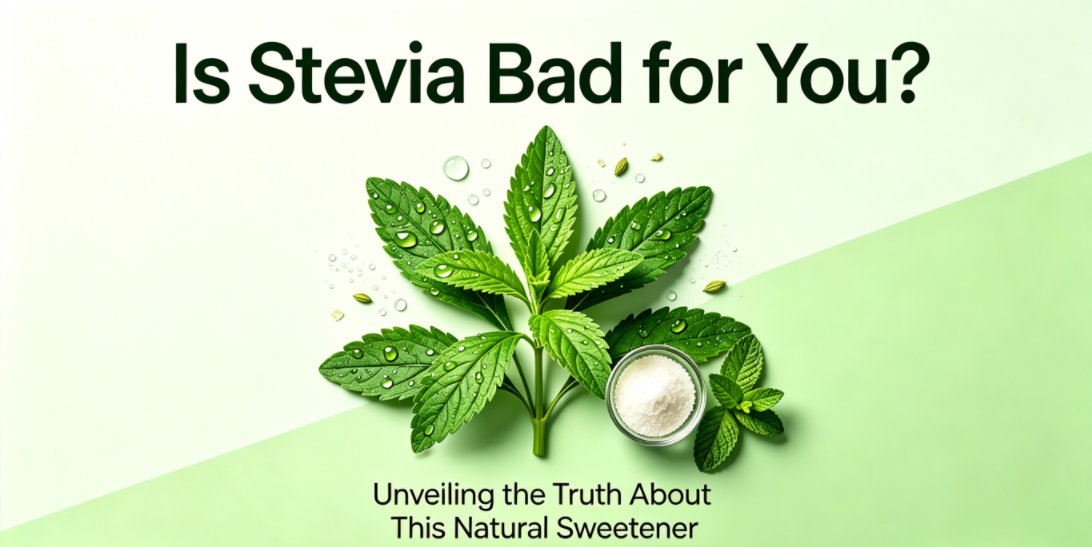

Is Stevia Bad for You? Full Safety Fact Check & B2B Guide to Premium Stevia Extract (Published: June 25, 2026)
Published Date: June 25, 2026
Author: Marketing Team, Changsha Vigorous-tech Co., Ltd.
Target Audience: Food & beverage manufacturers, dietary supplement brands, confectionery factories, wholesale ingredient distributors, private label B2B buyers worldwide
As global consumers cut added sugar and shift toward clean-label, zero-calorie natural sweeteners, stevia extract has become a mainstream replacement for sucrose, high-fructose corn syrup and artificial sweeteners like aspartame and sucralose. Meanwhile, misleading rumors about stevia side effects, toxicity and long-term health risks have gone viral online, making “is stevia bad for you” one of the most frequently searched health and food ingredient keywords on Google in 2026.
For B2B ingredient buyers, this public confusion directly impacts product formula design, market promotion and consumer trust. Many brand owners hesitate to add stevia to their products due to unproven health myths. Today, Changsha Vigorous-tech Co., Ltd., a professional manufacturer specializing in high-purity stevia leaf extract for over 12 years, delivers a science-backed, authoritative fact check to clarify all stevia safety doubts, distinguish high-quality pure stevia extract from inferior blended products, and help B2B partners select compliant, safe and cost-effective natural sweetener ingredients.
Nearly all negative claims about stevia stem from three misunderstandings, none of which apply to purified commercial steviol glycosides used in formal food manufacturing:
Myth 1: Stevia causes cancer and organ damage
This rumor originated from early animal tests that used extremely excessive stevia doses — hundreds of times higher than the actual daily intake of human beings. According to 200+ peer-reviewed toxicological studies and long-term human consumption tracking data released by FDA, EFSA and JECFA, high-purity stevia extract has no carcinogenic risks, no liver damage and no kidney side effects under normal dietary dosage. Indigenous populations in South America have consumed raw stevia leaves for more than 400 years without recorded chronic health hazards related to stevia.
Myth 2: Stevia raises blood sugar and disrupts metabolism
Pure stevia extract features a glycemic index (GI) close to 0, containing almost no calories and producing no impact on blood glucose and insulin levels. It is perfectly suitable for diabetic-friendly, keto and low-sugar functional food formulas. The real culprit behind blood sugar spikes is not stevia itself, but cheap inferior stevia products blended with maltodextrin, dextrose or other high-calorie fillers.
Myth 3: Stevia leaves bitter aftertaste and harms digestive health
Crude stevia powder and low-purity extracts indeed carry obvious bitter and licorice aftertastes, and unrefined raw leaf powder may cause mild gastrointestinal discomfort for sensitive groups. However, modern industrial high-purity stevia glycosides (RA97, RA98, RA99) eliminate aftertaste completely through professional extraction and de-bittering processes, with zero adverse effects on the human digestive system.
Clear Answer: Purified stevia extract is safe, healthy and approved by global mainstream food regulatory authorities.
Global authoritative food safety institutions have unified safety standards for commercial stevia sweeteners:
– JECFA & EFSA: Set a safe acceptable daily intake (ADI) of 4mg per kilogram of body weight, covering daily consumption scenarios for all age groups including children and pregnant women
– FDA (USA): Classified high-purity steviol glycosides as GRAS (Generally Recognized As Safe), fully allowed for food, beverage and dietary supplement production
– EU, Australia, Canada and Southeast Asia markets: Fully approved stevia extract as a legal clean-label sweetener with no usage limit in conventional food production
Core Key Point for B2B Buyers: Only crude stevia leaves, unpurified low-grade powder and blended stevia products with extra additives have potential health risks. Qualified high-purity stevia extract is 100% safe and superior to artificial sweeteners and sugar alcohols.
To help B2B buyers optimize product formulas, we compared stevia with mainstream sweeteners currently used in the food industry:
|
Sweetener Type
|
Calorie
|
Health Risk
|
Clean Label Compliance
|
|---|---|---|---|
|
Sugar / Sucrose
|
High
|
Obesity, diabetes, dental caries
|
Poor
|
|
Aspartame / Sucralose (Artificial)
|
Zero
|
Long-term potential metabolic risks, bad consumer reputation
|
Not clean label
|
|
Erythritol (Sugar Alcohol)
|
Low
|
Bloating and gastrointestinal discomfort
|
Medium
|
|
High-Purity Stevia Extract (GreenLeaf Biotech)
|
Zero
|
No proven side effects
|
100% clean label, plant-based, non-GMO
|
No. A6 Lugu International Industrial Park, 229# West Tongzipo Road, High-Tech Development Zone, Changsha 410205, Hunan, P.R China
13142031766




 DE_CH
DE_CH  EN
EN  DE
DE  ZH
ZH  DE_AT
DE_AT  ES
ES  FR
FR  FR_CA
FR_CA  AF
AF  JA
JA  EN_AU
EN_AU  EN_GB
EN_GB  EN_CA
EN_CA  ES_CL
ES_CL  RU
RU